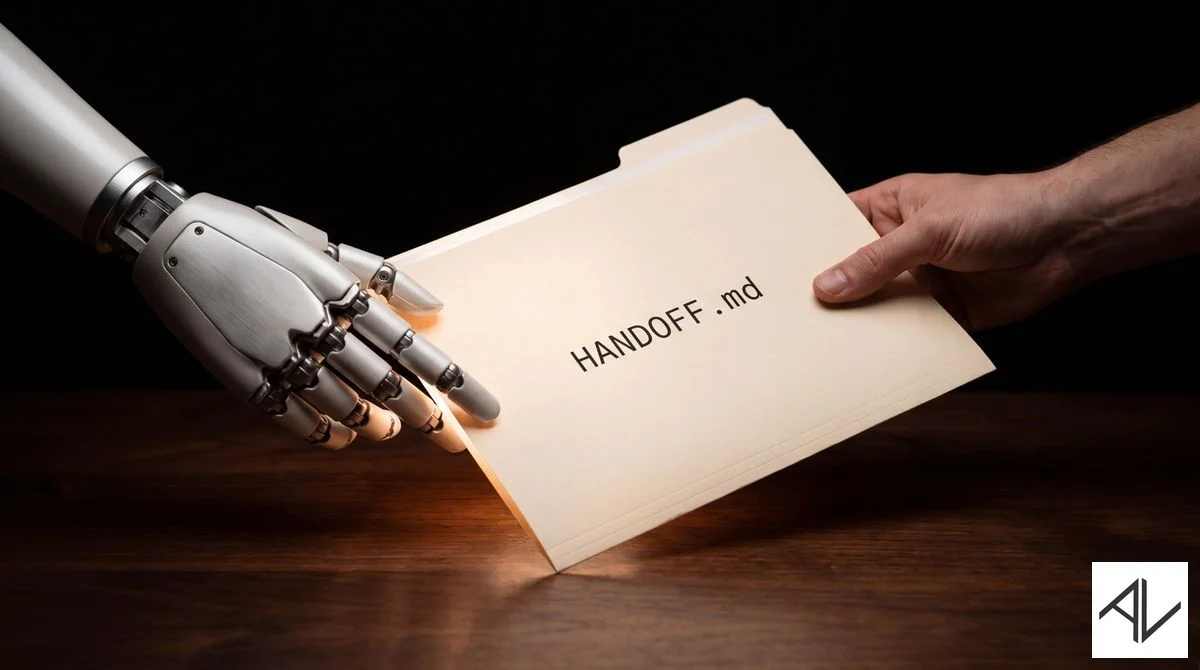
Everything the AI forgot overnight, handed back in a single folder.
1. Focus and Energy Aren’t the Same Thing
I recently had a rough health month. Interrupted sleep patterns. Food poisoning courtesy of Southern Thailand. The works.
And yet — every morning I woke up, I was motivated to get things done.
Even when my energy was a 1 or 2 out of 10, my focus was consistently a 4 or 5. I sat down. Connected with why I was doing the work. And got to it.
This happens when you have a strong purpose, clear values, and aligned goals. Energy fluctuates. Focus doesn’t have to.
The trick is separating the two in your head. “I’m tired” doesn’t automatically mean “I can’t concentrate.” Often you can — you just need to give yourself permission to work slower.
Worst case? Keep a backup set of low-energy, low-focus tasks ready. Admin. Filing. Light reading. If you really can’t push through, at least you’re not staring at a blank wall.
But most days, you’ll surprise yourself.
2. LLMs Have Anterograde Amnesia
Here’s something most people don’t think about: LLMs can’t form new long-term memories.
Every session starts fresh. Unlike a human employee who gradually builds deep understanding of your business over time, your AI resets to zero every conversation. It’s like working with someone who has anterograde amnesia — they can be brilliant in the moment, but they won’t remember yesterday’s meeting.
This is why humans won’t be fully replaced anytime soon.
But it’s also why context engineering — giving AI the right memory each session — is what separates power users from casual ones. The AI isn’t learning your business. You’re teaching it fresh every time. The better your systems for delivering that context, the better your results.
Some people are trying to solve this with memory systems. Tools like Openclaw. GitHub repos full of experimental solutions. You can even ask Claude to build a simple memory system for you.
But for now? The real skill is getting good at the handoff. Every session. Every time.
3. The Context Handoff
Section 2 was the theory. Here’s the practice.
Build a system that lets you rapidly inject context at the start of every AI session. I use a combination of:
- A
CLAUDE.mdfile in every project folder — AI reads this automatically - Template prompts that include my goals, constraints, and current status
- Saved conversation context I can paste in when continuing multi-session work
The goal is to get AI back up to speed in under 60 seconds.
It’s extra work. But until AI develops genuine long-term memory, this is the price of using it well.
More on context engineering in my Claude Code course.
4. Courses
I have a range of online courses that teach business people what they need to know about productivity and AI:
1. Next Level Productivity
A practical, straightforward course that teaches you how to achieve elite-level personal productivity in today’s constantly interrupted world.
2. The AI Agents, Automations and Agentic Workflows Guide
This non-technical course shows business people and non-coders how they can build and use AI agents in ChatGPT and Zapier.
3. The Complete Claude, Claude Code & AI for Work Productivity
A comprehensive course taking you from beginner AI concepts like prompt and context engineering, to cutting-edge AI productivity using terminal-based AI tools like Claude Code for non-coding office work. Usable with ChatGPT, Claude, Gemini and other current LLMs.
4. The AI Playbook
This is my longer premium course on how businesses can deploy AI tools and technology across their processes and teams.
5. ChatGPT for Managers
See how AI can solve complex management challenges in less than 30 seconds. Full prompt library and examples included.
That’s it for this week!
— Aaron